On this page
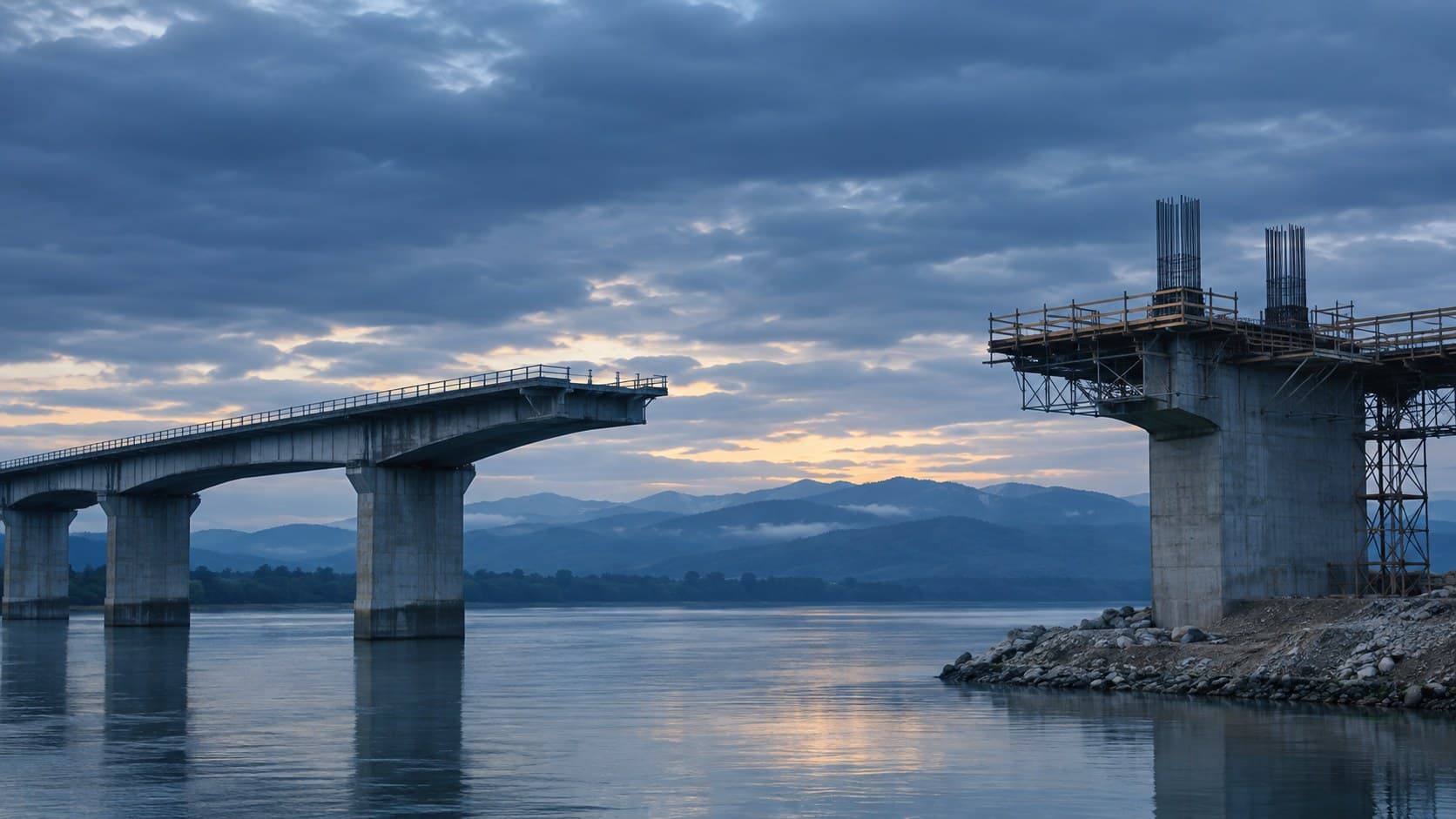
Infrastructure investing is not a single risk profile. For CAIA® Level I, distinguish the underlying project, its stage, its source of payment and the vehicle used to own it. A bridge still being built has different uncertainty from an operating utility, and a liquid listed share does not inherit every risk property of a privately valued asset.
Identify the asset before judging its return
Infrastructure supports essential economic or social activity: transport connections, power delivery, water systems, communications or public facilities. Investors may gain exposure through a concession, an operating company, a fund or traded securities. The physical usefulness of the asset does not by itself establish a safe investment. The cash-flow claim, ownership rights, price-setting mechanism and financing structure determine what an investor can receive and what can go wrong.
An economic facility may collect directly from users, as a toll road does. A social facility may instead rely on payments from a public authority under a contract. In both cases, read the contract rather than assuming that a public service produces a guaranteed payment. Usage, counterparty credit, operating standards, renewal obligations and political acceptance can all change the economics. The CAIA Association’s Level I curriculum companion explicitly asks candidates to distinguish economic and social infrastructure, public-private partnerships and government-related risks.
Follow the project from construction to operation
Greenfield exposure begins before an asset has an operating record. Design, permissions, construction and initial demand create separate questions. Will the project be completed, at what cost, and when can it begin collecting revenue? Even after construction, the first operating period may reveal lower usage or higher maintenance than assumed. An investor exposed to these phases is paid only if the contract and financing leave value after those risks are borne.
Brownfield exposure begins with an existing operating asset. Historical traffic, output or availability payments provide evidence for a forecast, though they cannot remove future risk. The CAIA Level I workbook describes greenfield as development through ramp-up and brownfield as operation. The distinction is useful because a project can move between phases while its concession and sector remain the same. A mature road considering a major extension can take on new construction risk even while the original lanes keep operating.
Risk can decline as uncertainties are resolved, but it need not decline smoothly. A completed facility may face a tariff reset, an expensive refurbishment or the end of a contract. A brownfield label is therefore a starting point for diligence, not a shortcut to a low-risk conclusion. Ask which risks have genuinely disappeared and which have simply become easier to observe.
Trace who pays and who sets the price
For a user-pay road, receipts depend on traffic and the charge per journey. For a contracted facility, the public counterparty’s payment obligation and performance terms may matter more than user numbers. A regulated utility can have demand that changes little, but the allowed tariff may be reviewed or capped. It can therefore suffer a squeeze when costs rise before an allowed price adjustment. Political opposition can affect the contract’s practical durability even when the legal wording appears clear.
A private party may build and operate under a concession while public ownership or control persists. The end date and transfer obligations matter: an investor cannot value cash flows after an expiry as if the concession lasted forever. Maintenance standards may also require spending before handover. The candidate should separate physical asset life from the term of the investor’s enforceable cash-flow rights.
The relevant public risk is not one generic label. Pricing risk concerns the permitted charge. Regulatory risk concerns a change in the rules or their application. Expropriation concerns loss of rights or control. Revenue shortfall concerns insufficient cash from users or counterparties. A case may combine them: a tariff cap can become a debt-service problem if the project is heavily financed. Identify the first cause and then trace its financial consequence.
A worked financing example
Consider an entirely illustrative operating water facility bought for 100 monetary units. The purchase is financed with 60 units of debt and 40 units of equity. Suppose annual cash available before interest is 8 units, the debt costs 5% a year, and we ignore tax, principal repayment, capital expenditure and fees solely to isolate the mechanism. Interest is 3 units, leaving 5 units for equity. Five divided by 40 is a 12.5% simplified cash yield on equity, compared with 8% before financing on the whole asset.
Now assume a tariff delay or operating shortfall reduces pre-interest cash to 5 units for a year, while the interest bill stays at 3. Equity cash falls to 2 units, or 5% of the original 40-unit equity investment. The asset cash flow fell by 37.5%, but equity cash fell by 60%. These invented figures show how leverage magnifies a change in the project’s cash flow; they are not estimates of a real utility or a recommendation to use debt.
The illustration also omits mandatory debt repayment and maintenance. If either consumes the remaining 2 units, nothing is distributable to equity. A candidate should therefore ask what a quoted yield is measured before and after, whether cash is actually available for distribution, and whether covenants can intervene before a simple cash calculation suggests insolvency. The CAIA programme page gives context for the qualification; the project analysis itself follows the official CAIA curriculum materials linked above.
The vehicle changes the investor’s experience
Direct ownership gives an investor a close connection to governance, operations and financing but demands the ability to assess and manage a large, concentrated asset. A closed-end private fund spreads holdings across projects but can call capital over time and may restrict exit until assets are realised. An open-end private vehicle may offer periodic dealing, subject to its rules and available liquidity. Listed securities can be sold on an exchange, yet their quoted prices also react quickly to wider equity-market sentiment.
The CAIA workbook discusses closed-end and evergreen structures and notes that withdrawal gates can restrict an investor’s exit. This means liquidity of the vehicle and liquidity of the underlying bridge are distinct concepts. A listed holding can be traded today while the bridge cannot; a private fund can own several stable operating assets yet still limit redemptions. Describing the assets as long-lived does not answer the investor’s own cash-access question.
Reported volatility also depends on how holdings are priced. A listed security has a frequent market price. A privately held asset may be valued periodically using models and appraisals. Smoother reported marks should not automatically be read as a smoother economic exposure. Examine the cash-flow sensitivity, contract terms and leverage alongside the return series, especially when comparing vehicles.
Test inflation protection rather than assuming it
Infrastructure is often discussed as a potential defence against inflation because some charges or contract payments can rise with a price index. The protection belongs to the enforceable payment rule, not to the concrete or steel. If a contract permits an annual adjustment only after a review, a sudden cost increase may reach the operator before the higher tariff is allowed. If the tariff is capped, the operator may absorb part of the increase. A fixed payment can lose purchasing power even though the asset supplies an essential service. Read the actual indexation clause, reset timing and cost base before describing the cash flow as inflation linked.
The comparison also changes with financing. Fixed-rate debt can make nominal interest predictable while revenue rises, but refinancing may expose the project to higher rates later. Floating-rate debt can increase interest cost before regulated receipts adjust. In a concession near expiry, an investor may have little time to recover a temporary squeeze. An exam answer should therefore identify who bears inflation in costs, who can pass it through, how quickly, and how debt reacts. The same asset can look defensive under one contract and vulnerable under another. This is a contract and cash-flow judgement, not a claim that infrastructure always beats inflation.
Use a stage-and-contract checklist in the exam
When a vignette names an infrastructure asset, first identify whether it is planned, being built, ramping up or operating. Then identify the payer, price mechanism and contract term. Next ask who bears construction overrun, demand, operating and political risk. Finally, locate debt and the investor vehicle. This sequence prevents a familiar sector name from doing the analytical work for you.
A common error is to treat essential service demand as a promise of stable investor returns. People may need the service, but the investor may face capped prices, uncertain usage, high costs, expensive debt or a limited concession. Another is to call every operating project risk free. The more precise answer identifies which uncertainty the operating record reduces and which contractual or regulatory exposure remains. For a broader study approach, see how Omni works.
Sources
- CAIA Level I Workbook, March 2021 · caia.org · Retrieved
- CAIA Level I Curriculum Companion · caia.org · Retrieved


