The risk-management market is compounding
Global spend on risk management, 2025–2029.
Source: Research and Markets — Risk Management Market Report 2025
The Financial Risk Manager (FRM®) is GARP’s global standard for the people banks trust to measure and contain risk. Here’s how the exam works, why 97,000+ professionals chose it, and how Omni Finance Academy gets you through both parts.
97,000+
Certified FRMs worldwide
190+
Countries and regions
2 parts
One continuous risk curriculum

Nov 2025 pass rate
P1 47% · P2 50%
Source: GARP
After 2008, risk management moved from a back-office function to a board-level priority — and the regulation has only deepened since. Basel III’s output floor ramps to 72.5% by 2027 and DORA’s operational-resilience rules went live across the EU in 2025. Banks now compete for people who can prove they understand it. The FRM is how you prove it.
Global spend on risk management, 2025–2029.
Source: Research and Markets — Risk Management Market Report 2025
Certified FRMs worldwide, 2008–2025.
Source: GARP press releases & certification disclosures
Basel III endgame, DORA, model risk and climate stress testing have made risk a permanent board agenda. 44% of banks cite a shortage of risk-skilled talent as their top barrier — the demand is structural, not cyclical.

Held by 97,000+ professionals across 190+ countries and growing fastest in Asia-Pacific. An FRM in Singapore reads the same as an FRM in London or New York — the credential travels with you.
The FRM is the deepest dedicated risk credential there is. It doesn’t duplicate the CFA — it goes where the CFA stops: VaR, expected shortfall, credit modelling, and the Basel machinery itself.
Two parts, one continuous risk curriculum. Part I builds the toolkit; Part II puts it to work. Here’s exactly what each tests, and how candidates have actually fared.
Builds the toolkit
Topic weights
Source: GARP · FRM Part I Exam Weights
Puts it to work
Topic weights
Source: GARP · FRM Part II Exam Weights
GARP sets the minimum passing score by item-response theory, not a fixed percentage — so the bar moves with the cohort.
Source: GARP exam results (Nov 2023 – Nov 2025)
The curriculum isn’t academic — every topic maps to a desk that hires. Here’s the ladder, the pay, and the roles the FRM opens.
USD base, ex-bonus
Entry to the second line — measuring exposure, running the models.
Owns a book of risk: market, credit or operational, with reporting lines.
Sets methodology and risk appetite for a desk or division.
Board-level accountability; total comp routinely passes $1M at large banks.
Base salary only — risk roles commonly add 15–100% bonus at senior levels. Figures blend US and UK markets.
Source: Kaplan Schweser, Robert Half 2026, Barclay Simpson 2025, 300Hours
VaR, expected shortfall and stress testing across the trading book.
PD / LGD modelling, counterparty exposure and portfolio credit.
RCSA, third-party and model risk, DORA operational-resilience programmes.
LCR / NSFR, asset-liability management and funding risk.
Model validation and the quantitative machinery behind regulatory capital.
Risk appetite, governance and board-level reporting across the firm.

The whole study cycle for both parts in one place — notes mapped to every GARP objective, a tagged question bank, full mocks and a planner that recalculates nightly. Not a shelf of separate tools.
Free to start — one full FRM topic free, no card required.
Every GARP learning objective distilled to exactly what the exam tests — Part I VaR mechanics linked forward to where Part II uses them.
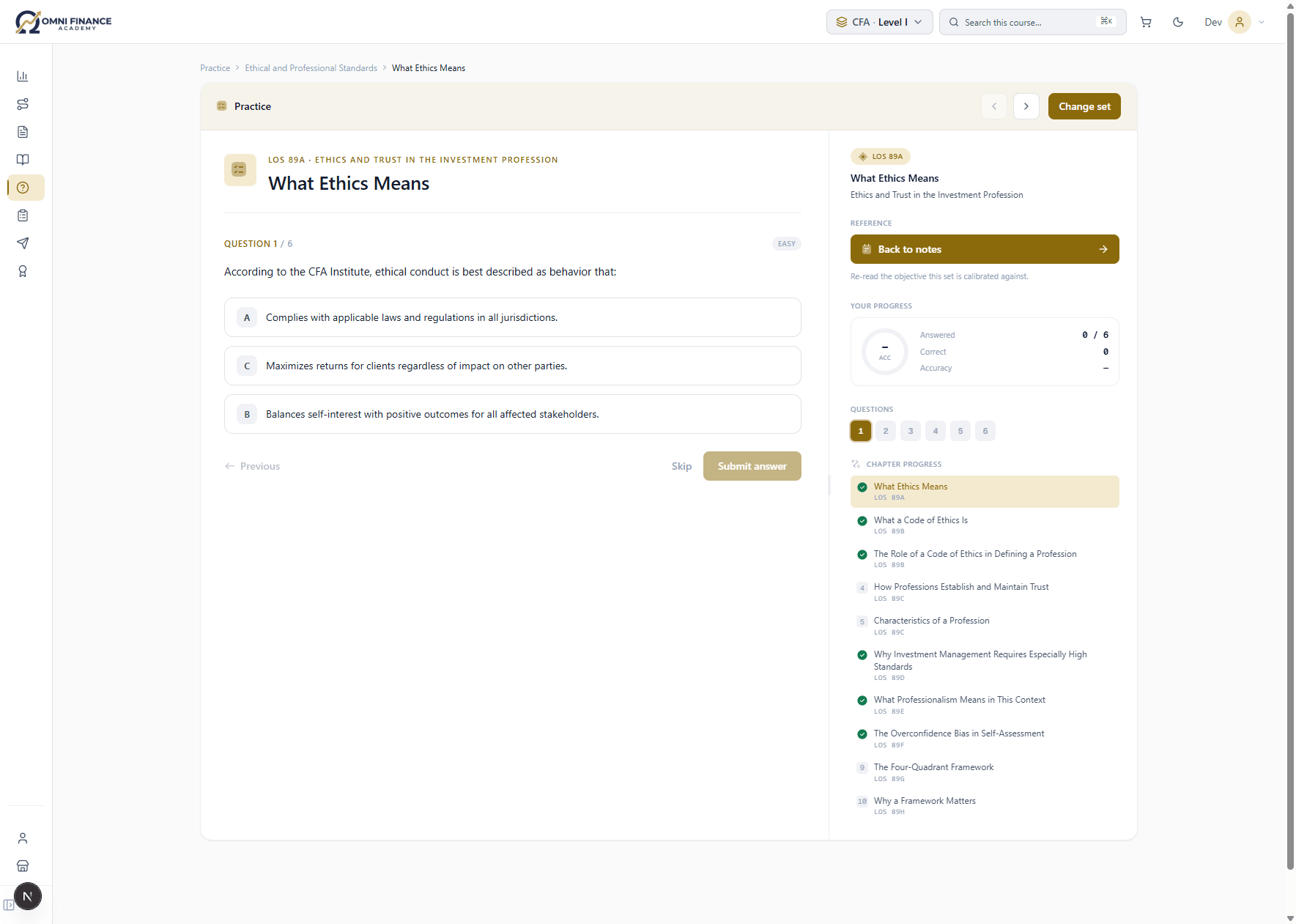
Exam-style questions tagged to their LOS and the trap they test, with a worked trace on every wrong answer — not just the right letter.
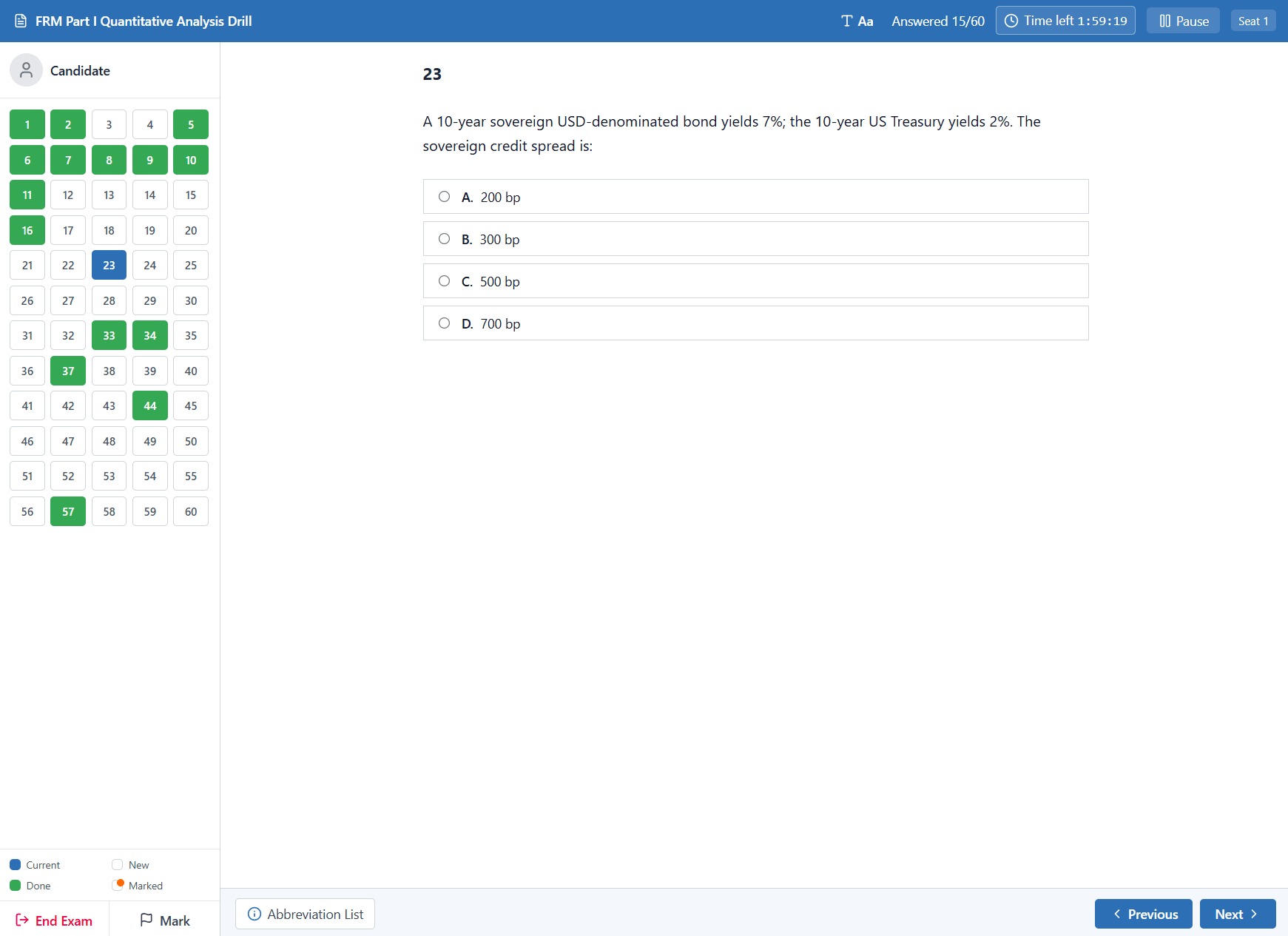
A CBT panel built 1:1 with the real sitting — same format, timing and pressure — so test day feels like a rehearsal you’ve already done.
Every formula on one auditable sheet, plus a last-mile crashnote per topic for the final week before the exam.
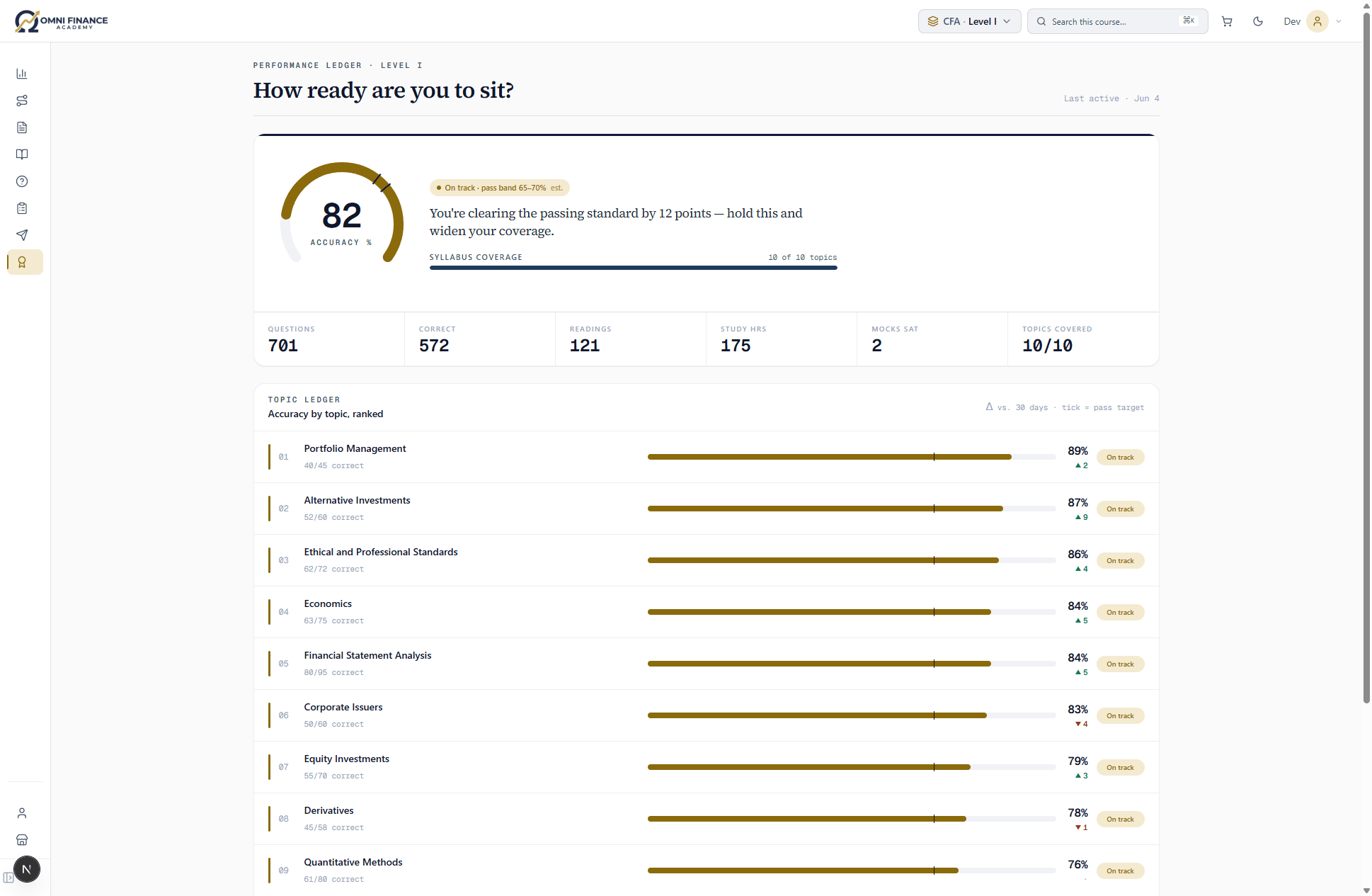
A days-to-exam counter and a weekly Ready-to-Sit signal calibrated against the published MPS bands — see the gap before it bites.
A timeline that reads your mastery each night and rebalances. Miss a week and tomorrow is already re-planned around your sitting date.


Two parts. Part I is 100 multiple-choice questions in 4 hours covering foundations of risk, quantitative analysis, financial markets and products, and valuation and risk models. Part II is 80 multiple-choice questions in 4 hours covering market, credit, operational, liquidity, investment and current-issue risk.
In November 2025 GARP reported a Part I pass rate of 47% and a Part II pass rate of 50%. Across recent sittings Part I has run roughly 45–56% and Part II roughly 50–56%. GARP sets the minimum passing score by item-response theory rather than a fixed percentage.
GARP allows it, but we strongly recommend against it. Most candidates pass faster by spacing the two parts at least one sitting apart so Part II builds on a Part I foundation that has actually settled.
Most candidates complete both parts within 12–18 months, budgeting around 400–500 hours of study in total. You also need two years of relevant full-time risk experience to be certified — that can be earned before, during or after the exams.
They answer different questions. The CFA is a broad investment charter; the FRM is the specialist risk credential. If your career is in the second line of defence — market, credit, operational or model risk — the FRM goes deeper than the CFA does, and many professionals hold both.
Part II readings are reviewed every sitting and explicitly versioned against the GARP study-guide release, so the current-issues and operational-resilience material reflects the latest curriculum, not an edition from several years ago.
Free to begin — one full topic free per part, enough to judge whether our materials fit how you study before you pay anything.