Skip to content

CFA Level II study notes built for vignettes

The Level II curriculum condensed to its learning outcomes, with the cross-topic links the item sets lean on made explicit — each note cited to the curriculum and carrying its Evidence Panel.

  • Source-cited
  • LOS-mapped
  • Evidence Panel on every reading

410+

Learning outcome statements

~350 hrs

Recommended study time

3×/year

Sittings · item-set vignettes

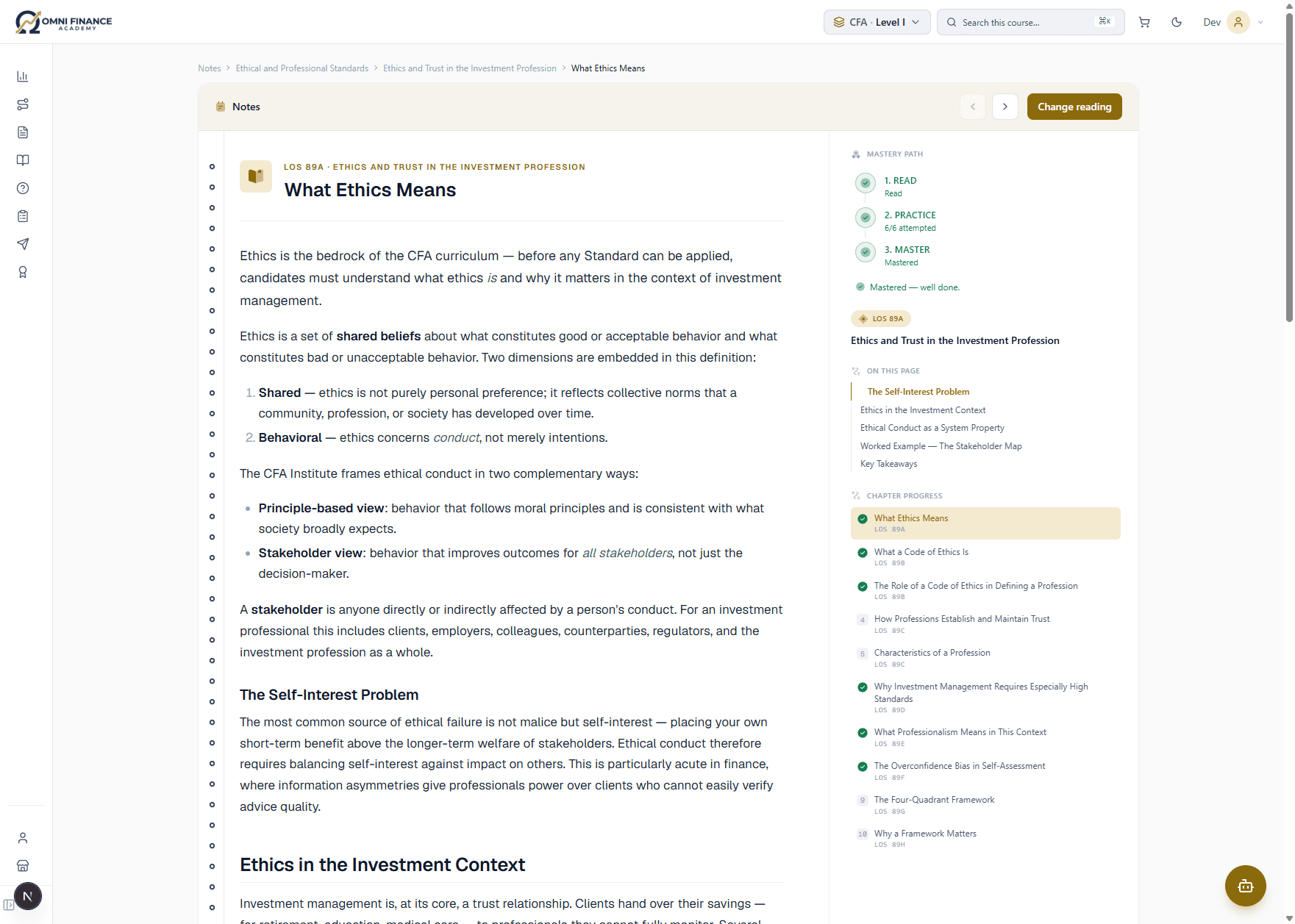
Omni Finance Academy study note reading view

Notes that earn their place in your day

  1. 01

    Mapped to every LOS, cited to the curriculum

    Each note opens from a learning outcome statement and closes with its source citation. You always know what the reading asks you to be able to do, and where the claim comes from.

  2. 02

    An Evidence Panel on every reading

    Candidate-reported difficulty, the pitfalls that trip people up, and how often the topic appears — surfaced on the reading so you spend your hours where the exam does.

  3. 03

    Condensed, not compressed

    We cut the textbook padding, not the substance. The notes are short enough to revise in a sitting and complete enough that you are not forced back into 3,000 pages of curriculum.

See a real note

This is an actual CFA reading as it appears in the platform — the learning outcome, the Evidence Panel, the key points, the pitfalls, and the source citation. No teaser blur.

LOS 23.bEquity Valuation · Free Cash Flow Models

FCFF vs FCFE: choosing and reconciling

Difficulty

Candidate-reported: Hard

Exam frequency

High — a recurring item-set anchor at Level II

Free cash flow to the firm (FCFF) and to equity (FCFE) answer different questions about the same business. Picking the wrong one — or discounting it at the wrong rate — is the classic Level II vignette trap.

Key points

  • FCFF = NI + NCC + Int(1 − tax) − FCInv − WCInv; discount at the WACC to value the whole firm.
  • FCFE = FCFF − Int(1 − tax) + Net borrowing; discount at the required return on equity to value equity directly.
  • Use FCFE when capital structure is stable; prefer FCFF when leverage is changing, because WACC is steadier than the cost of equity.

Common pitfalls

  • Discounting FCFF at the cost of equity (or FCFE at the WACC) — match the cash flow to its claimant.
  • Forgetting the after-tax interest add-back when bridging FCFF to FCFE.

Source: CFA Program Curriculum, Level II — Equity Valuation, Free Cash Flow Valuation.

Get the notes — and everything else

The notes ship in every plan. Pick how far you want the rest of the toolkit to take you.

About the study notes

They are a complement, not a replacement. We cite the official curriculum and recommend reading it; the notes add condensation, cross-topic links, and the evidence the official materials do not provide.

Study CFA Level II the evidence-led way

Start with one full topic free — read a real note before you decide.