
CFP® study notes: keep the cue that drives a decision
CFP exam notes work when they preserve facts, conditions and reasoning needed later. Build brief recall prompts, test them, and repair the gaps they expose.
Study Systems · · 7 min read
New to Omni?·Get 20% off your first purchase with code WELCOME20 at checkout.See plans
Schedules, review cycles and practice routines that hold up alongside a full-time job.
Page 1 of 2

Useful CFA notes prompt an explanation, calculation or distinction without the reading open. Build them from learning outcomes and revise what retrieval exposes.
· 6 min

Begin with a few diagnostic questions, read to repair the gaps they reveal, then retest without notes. Give each CFA reading a purpose and a stopping rule.
· 7 min

A working candidate needs repeatable study blocks, a recovery rule and time for practice. Build a realistic week without treating a missed session as failure.
· 7 min

Mix previously learned CFA topics in short retrieval sets, diagnose the type of error, and adjust the next rotation. Here is a practical weekly pattern to follow.
· 8 min

A useful CFA flashcard tests one decision and its condition. See how to turn curriculum statements into precise cards and reject prompts that hide understanding.
· 7 min

A working candidate needs study blocks with specific tasks and room for interruption. Build a repeatable FRM week, then use practice errors to decide what moves.
· 6 min

Mixing related FRM topics forces you to identify the method before calculating. Use a small weekly rotation, inspect errors, and keep new material in the schedule.
· 7 min

A working candidate needs protected study appointments, a response to disrupted evenings and a weekly reset. Here is a practical shape that survives full-time work.
· 7 min

Use short, scheduled recall sessions across the week, bring weak material back sooner, and protect one longer weekend review so old topics stay available.
· 7 min

A weekly CAIA review tracks curriculum coverage, topic accuracy and a concrete change for next week. Use this checklist to turn practice evidence into a plan.
· 6 min

Work backwards from your booked CAIA exam appointment. Reserve review, sample-exam and buffer blocks, then fit new material into the time that is realistically left.
· 6 min

Start with your appointment, reserve review and mock analysis, then allocate realistic curriculum blocks and buffers. See an illustrative schedule you can adapt.
· 6 min
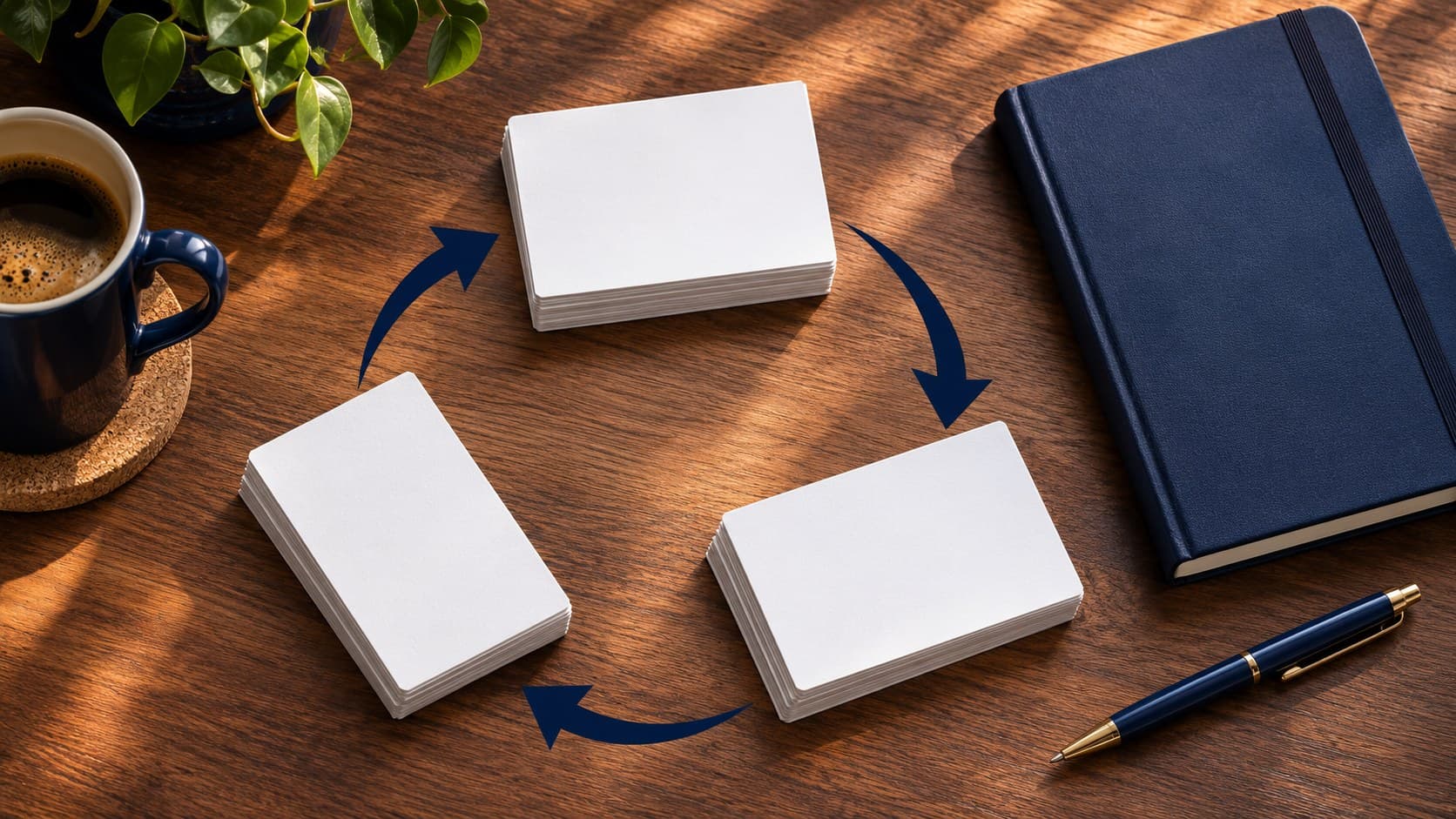
Interleaving asks you to retrieve and choose between topics after a gap, rather than finish one block at a time. Use a repeatable rotation and focused error review.
· 7 min

Useful FRM notes preserve the decision, assumptions and checks needed later. Build a compact reading record you can recall and apply without copying the chapter.
· 6 min

Start a CAIA reading with diagnostic questions, then use the official curriculum to repair specific gaps. This routine turns notes into evidence of understanding.
· 6 min

Record the tested objective, the reason for each wrong answer and the correction you can reproduce; then sort the log into a short weekly revision queue.
· 7 min

A useful FRM card asks for one decision or step that caused an error. See how to write and check precise prompts without copying whole worked solutions onto a card.
· 7 min

For one CFA reading, a closed-book answer reveals the gap; a selective reread repairs it. Use a repeatable routine without mistaking familiarity for recall.
· 7 min

The CFA study planner may show coverage while topic practice exposes weak recall. Use a fixed weekly check to decide which task moves into the next seven days.
· 7 min

Use a brief question attempt to find the ESG distinction you cannot explain, then consult the current reading and write only the note needed to repair that gap.
· 8 min

A short FRM weekly review should separate curriculum coverage from topic accuracy, then turn the weakest evidence into a workable plan. Use this fixed checklist.
· 6 min

A working candidate can revisit old material without losing the week to review. Build a CAIA-specific recall plan that changes with the question format and workload.
· 7 min

A useful CAIA flashcard asks for one decision, distinction or calculation and gives a checkable answer. See how to split overloaded cards and retire weak prompts.
· 6 min